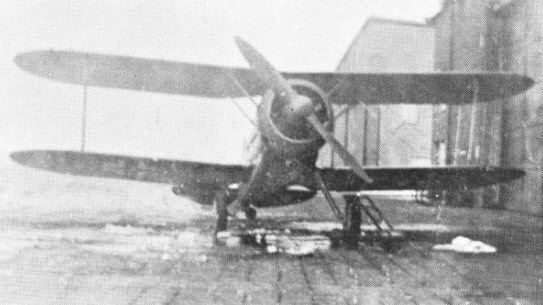
1935 - In an attempt to categorize the aircraft types by function, a code was applied
to each aircraft type in use. When the Gladiators were acquired, they were given the code "D4".
1937 - Kapt. Balodis and Kapt. Graudins are sent to England to arrange for the purchase of Gloster Gladiators.
They flew the Avro Tudor (presumably their flight checkout) and then they flew Gladiators. Before returned to
Latvia they had each logged over 30 hours of flight time on the Gladiators, including blind/night flying training.
Sept. 11, 1937 - the first four Gladiators depart from London, England, crated and loaded aboard
the ship Balttraffic.
Sept. 25, 1937 - the next nine Gladiators are shipped to Latvia.
Oct. 20, 1937 - as the aircraft began to arrive and be assembled at Spilve, a british pilot test flies each
before passing it on to the Latvians.
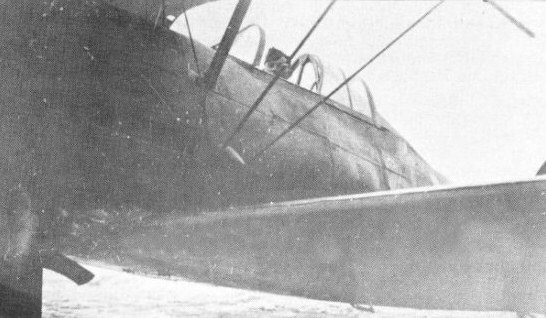
The aircraft were originally ordered with open cockpits, but the glass canopies were ordered separately
shortly thereafter.
A second order for an additional 13 Gladiators was placed, and these were received in March/April 1938.
August 21, 1938 - the 26 new Gloster Gladiators are ceremonially presented to the Aviation Regiment at the Aviation Festival
in Spilve. They were for the most part purchased with money donated by the public and raised at Aviation Festivals, so it was
deemed appropriate to do the presentation in this very public manner.
The aircraft were divided up between the two fighter squadrons as follows:
1st Fighter Squadron (Capt.N.Balodis) - #s 114, 115, 116, 117, 118, 119, 120, 121, 122, 123, 124, 125. (By September, 1939
only nine still remained with this squadron.)
2nd Fighter Squadron (Capt.J.Balodis) - #s 163, 164, 165, 166, 167, 168, 169, 170, 171, 172, 173, 174, 175 (By September, 1939
twelve still remained with this squadron)
By September 1939, four Gladiators had been transferred to the new 3rd Fighter Squadron.
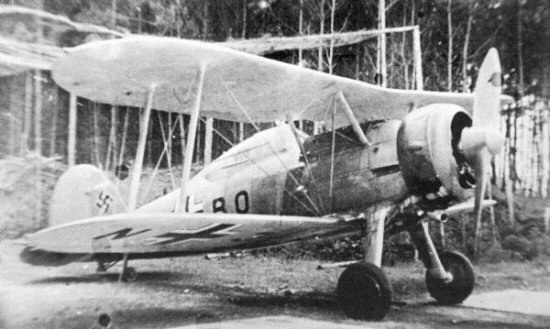
Some of the Gladiators had the asymmetrical wing markings. Upper wing markings were
without the white surround.
1939/1940 - as the Finns and Soviets were at war nearby, the Soviet bombers returning from their
missions were often violating Latvian air space. This made the need to train new, capable Gladiator
pilots even more urgent so that they could enforce aerial sovereignty.
June 15, 1940 - with the Soviet occupation/invasion looming, the Gladiators stationed at Spilve
are ordered to quietly fly out from the airfield at twilight and re-base. The 1st Squadron was sent
to Rumbuli (Jumpravmuiza), the 2nd Squadron was sent to Koknese, and the 3 remaining Gladiators of
the 3rd Squadron joined the Bulldogs assigned to the Latvian University's agricultural farm near Ramava.
July/August 1940 - the remaining Gladiators are gathered at Krustpils, where they are stripped of their
armament. Some of them are broken down and packed into boxes amazingly, to be sent to Germany (note
that at this point Germany and the Soviet Union were still allied). On the transfer flights to
Krustpils, the latvians were accompanied by Soviet fighter aircraft, for their "protection".
August 17, 1940 - The Gloster Gladiators were the last aircraft to fly for the Latvian Air Force.
During the Soviet occupation, a "United" Air Festival was staged at Spilve. The Latvian portion of
the theme was a flyover by three Gloster Gladiators which, ironically, were making their last Latvian
flight, united or otherwise.
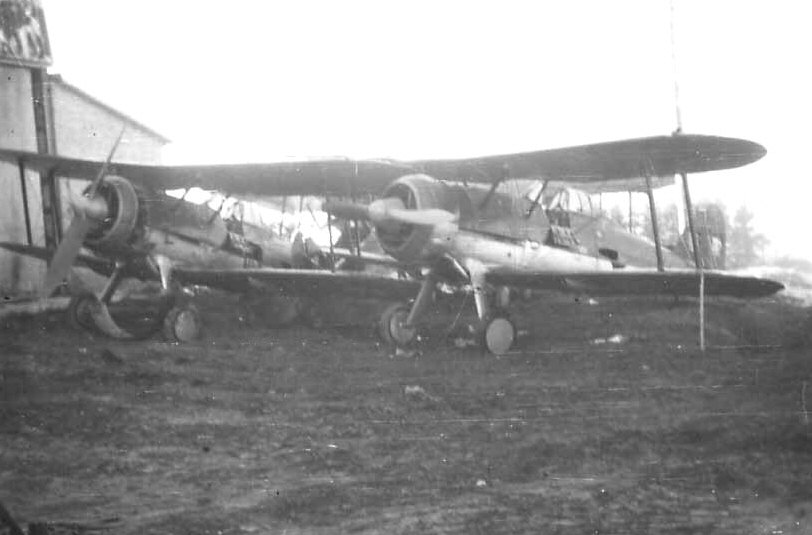
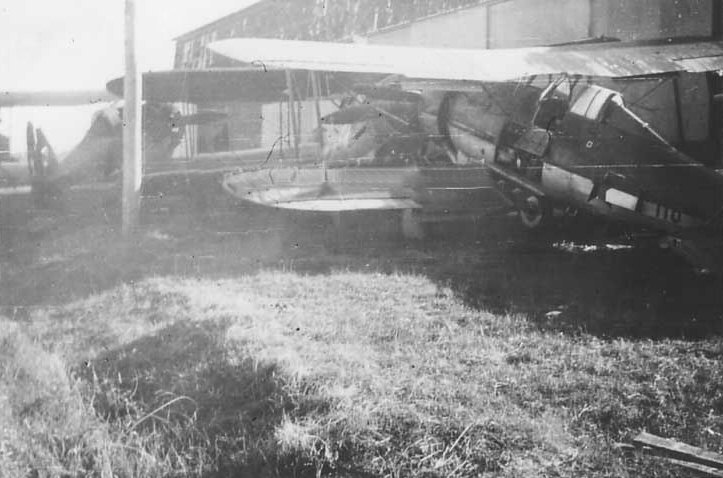
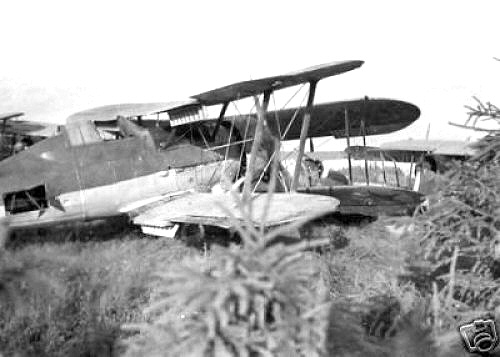
1941 - some of the Gladiators are destroyed in the German attack upon the Soviet Union.
In some manner, either through the original shipment of captured Latvian Gladiators by the Soviet
Union or as captured war trophies in 1941, a number of Latvian Gladiators found their way to glider
training schools in Germany, where they were used to tow gliders during pilot training.
The last of these survivors were all authorised for deletion from the Luftwaffe inventory on 16 March 1943.
#114
1937 - Assigned to the 1st Fighter Squadron.
[See Photos above]
#115
1937 - Assigned to the 1st Fighter Squadron.
#116
1937 - Assigned to the 1st Fighter Squadron.
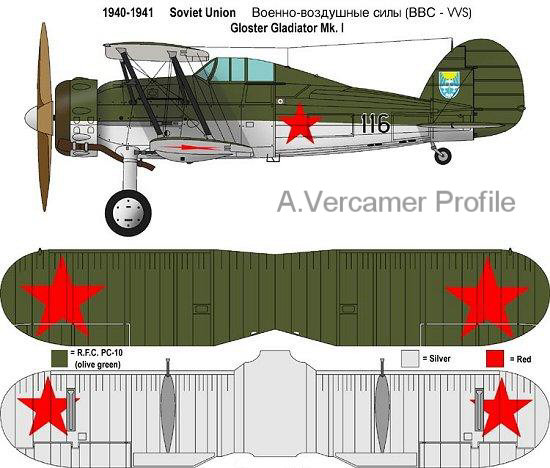
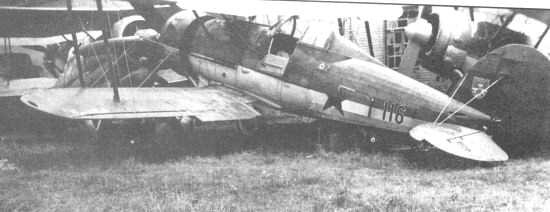
After the Soviet occupation, this Gladiator was painted with the Soviet red star, but the Latvian serial number and squadron insignia remained.
#117
1937 - Assigned to the 1st Fighter Squadron.
#118
1937 - Assigned to the 1st Fighter Squadron.
#119
1937 - Assigned to the 1st Fighter Squadron.
#120
1937 - Assigned to the 1st Fighter Squadron.
#121
1937 - Assigned to the 1st Fighter Squadron.
1938 - Destroyed in a landing accident.
[See Photo above]
#122
1937 - Assigned to the 1st Fighter Squadron.
#123
1937 - Assigned to the 1st Fighter Squadron.
[See Profile above]
#124
1937 - Assigned to the 1st Fighter Squadron.
#125
1937 - Assigned to the 1st Fighter Squadron.
[See Photo above]
#126
1937 - Assigned to the 1st Fighter Squadron.
#163
1937 - Assigned to the 2nd Fighter Squadron.
#164
1937 - Assigned to the 2nd Fighter Squadron.
#165
1937 - Assigned to the 2nd Fighter Squadron.
#166
1937 - Assigned to the 2nd Fighter Squadron.
Summer, 1938 - #166 is assigned to pilot Emils Briedis of No.2 Squadron.
[See Photos above]
#167
1937 - Assigned to the 2nd Fighter Squadron.
1939 - crashed (but repairable) by Lt.Karklins.
[See Photos above]
#168
1937 - Assigned to the 2nd Fighter Squadron.
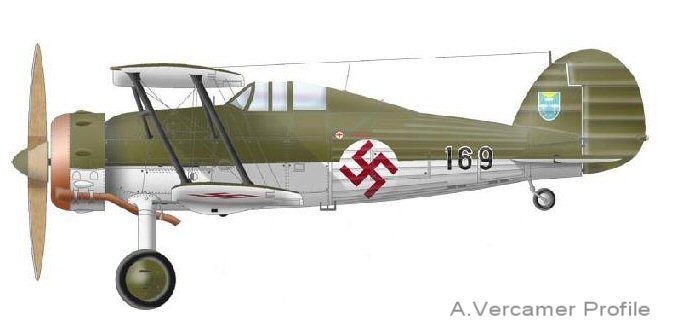
#169
1937 - Assigned to the 2nd Fighter Squadron.
[See Profile above]
#170
1937 - Assigned to the 2nd Fighter Squadron.
#171
1937 - Assigned to the 2nd Fighter Squadron.
July 19, 1939 - Aircraft was totally destroyed near Bildene (Kurzeme) when the
pilot (Zanis Tomsons) crashed while performing unauthorized aerobatics over his parent's home.
#172
1937 - Assigned to the 2nd Fighter Squadron.
#173
1937 - Assigned to the 2nd Fighter Squadron.
#174
1937 - Assigned to the 2nd Fighter Squadron.
#175
1937 - Assigned to the 2nd Fighter Squadron.
1939 - lost in a landing crash at Daugavpils, pilot Teodors Abrams survived.
[See Photo above]
CAPTURED BY SOVIETS
CAPTURED BY GERMANS
Sources
- Briedis, Emils Latviesa Stasts
- Bruvelis, Edvins Latvijas Aviacijas Vesture
- Crawford, Alex Gloster Gladiator
- Humberstone, R. (ed) Latvian Air Force 1918-1940
- Irbitis, Karlis Of Struggle and Flight