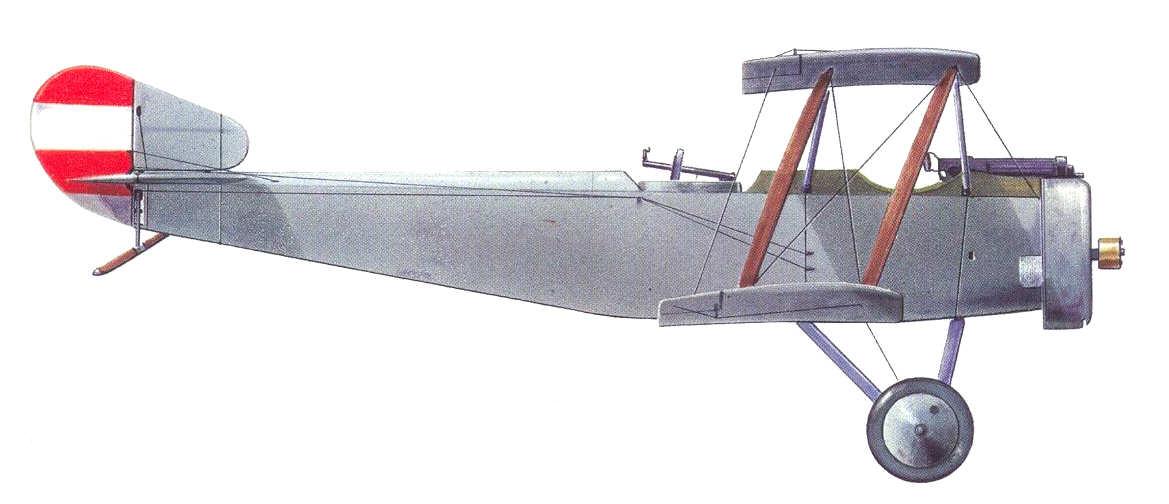
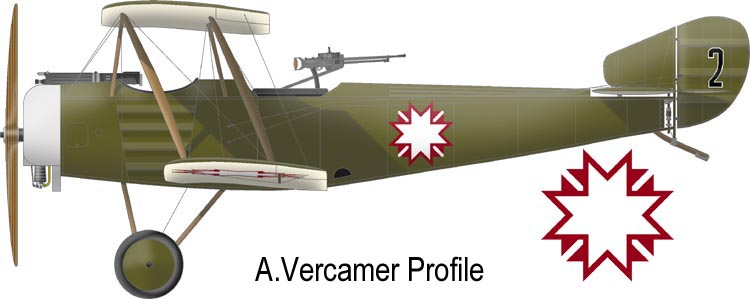
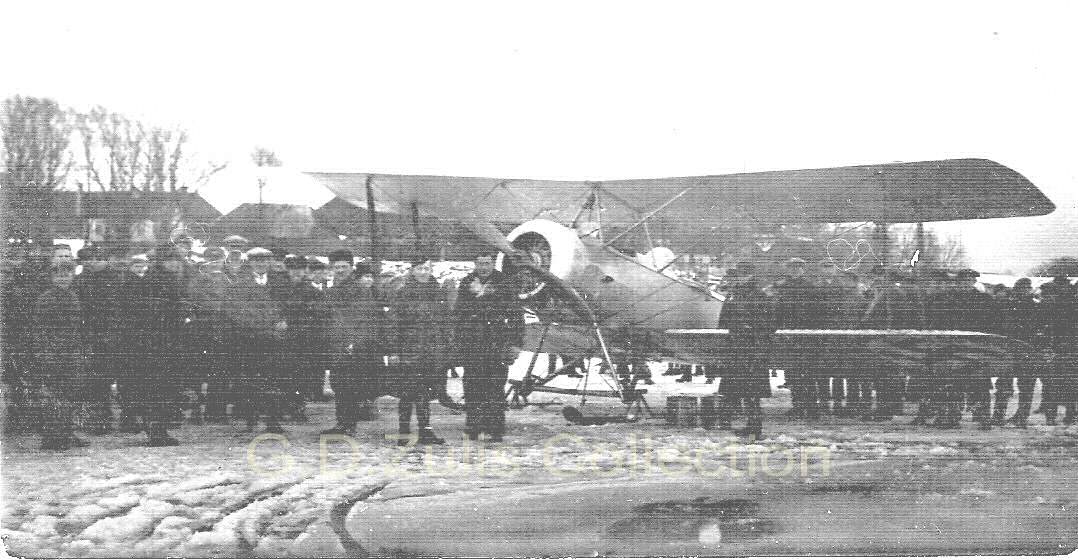
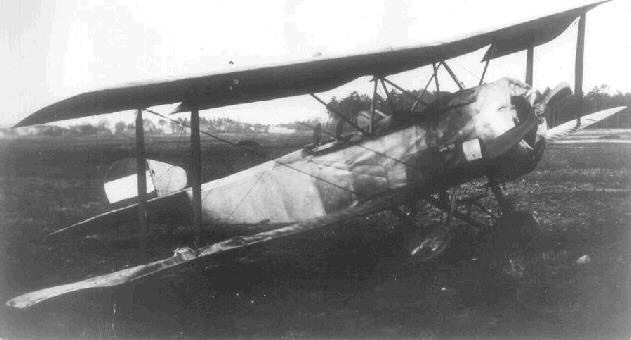
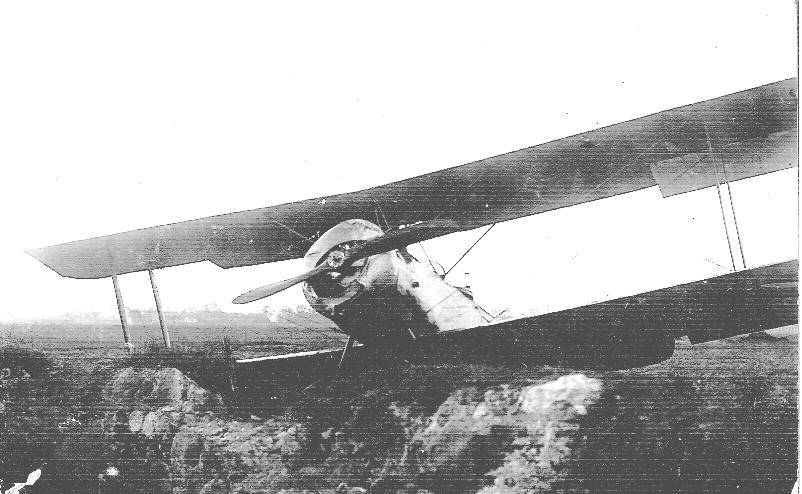
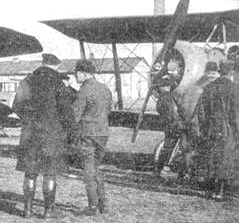
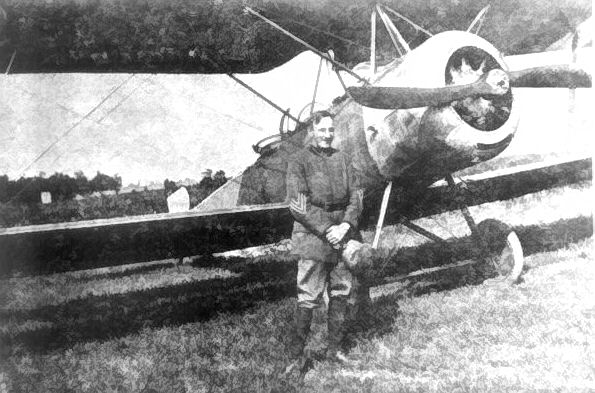
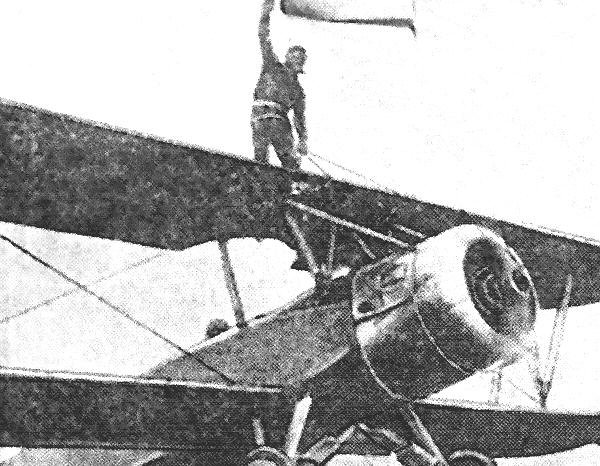
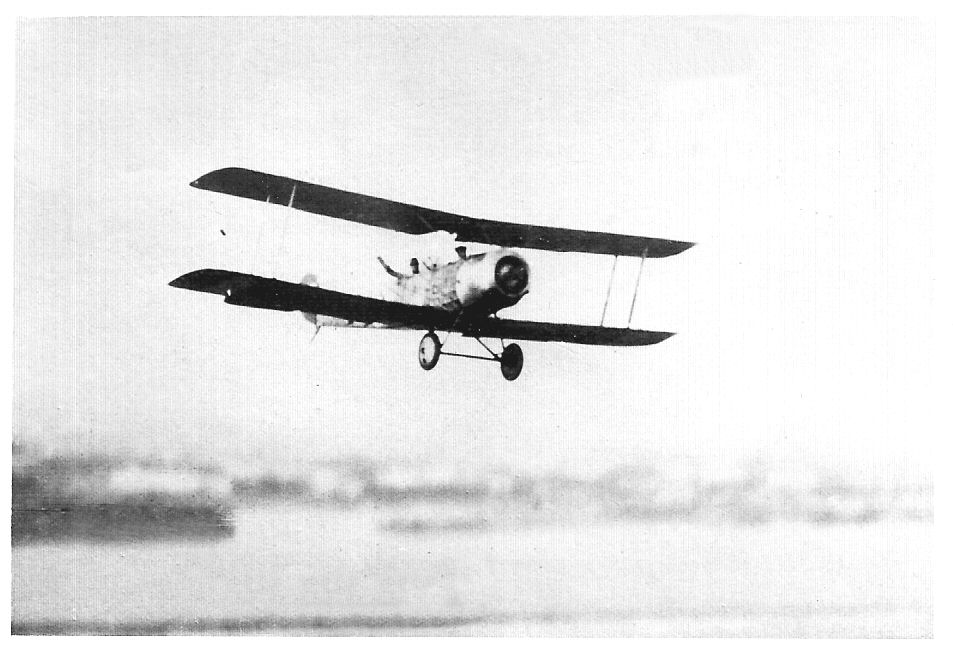
Note that this aircraft did not survive long enough to receive a Latvian Air Force serial number.
The germans had captured two Sopwith Strutters from the Bolsheviks when they re-took Riga.
One of these was subsequently acquired by the latvians and became one of their first military aircraft.
After some basic maintenance and repairs, this aircraft was test flown at Spilve on August 5-7, 1919.
August 17, 1919 - Assigned to the 1st Squadron and ordered to Krustpils to participate in the
battles vs the bolsheviks in Latgale. The transfer is done by rail because of an acute shortage of
fuel suitable for aviation.
August 25, 1919 - brief test flight in Krustpils (V.Jakubovs & F.Zutte)
August 26, 1919 - the first military sortie by Latvian Air Force - V.Jakubovs (p) and F.Zutte (o)
carried out a recon of Krustpils-Livani-Cargrade-Krustpils, while also dropping 12 bombs. The flight
took 70 minutes and was carried out at an altitude of about 650 metres. The aircraft took damage from five bullet holes.
September 1, 1919 - the Squadron is withdrawn to Mazjumpravmuizas aerodrome because of a lack of fuel.
September 3, 1919 - recon flight to Kurzeme (V.Jakubovs & Zutte). Aircraft engine fails near aerodrome
and they make a forced landing. The aircraft was repaired, but the problem repeated itself and the
mission was not completed.
September 4, 1919 - after two test flights (both with misfiring engines) the spark plug problem is finally
corrected and a 90-minute recon mission is successfully completed.
September 7, 1919 - two brief test flights - more problems with spark plug failures.
September 12, 1919 - two recon flights, both only partially completed because of continuing engine problems.
September 24, 1919 - Jakubovs and passenger British Major Greenslate depart Spilve for Reval (after the
first attempt in Strutter #2 failed). They get as far as Volsma when they are forced to land due to
deteriorating weather conditions. The Major completed the journey by rail.
September 28, 1919 - Jakubovs flies back to Riga via Rujiene, Burtnieku Lake, and Cesis.
September 30, 1919 - ambitious recon completed, flying to Tukums and back (total flight time over 2 hours)
October 1919 - The Strutter and the Nieuport fly reconnaissance missions from a small airfield
near the Smerlis forest on the north-east outskirts of Riga. The recon photos of Bermont's forces
were then used for targetting the British naval bombardment.
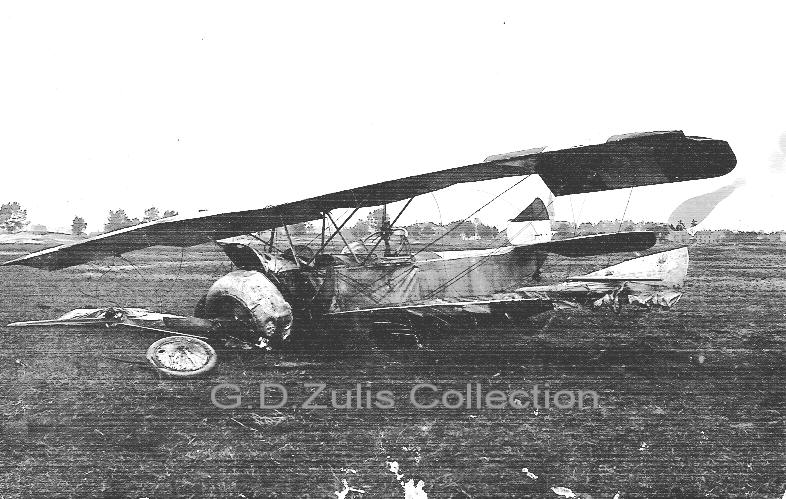
October 22, 1919 - V.Jakubovs (p) and Sparins (o) damaged their propeller on takeoff, resulting
in a heavy crash. Both airmen were unharmed, but the aircraft was heavily damaged and subsequently written off.
Prior to its destruction, this aircraft had completed 7 missions pertaining to the Bermont-Avalov conflict.
#2
Original serial number - N7046 (with 120-hp Le Rhone)
Acquired when Mardoks flew it over from the bolshevik forces to the Latvians. (July 19, 1919)
August 26, 1919 - Jakubovs(p) and Zutte(o) flew the Strutter, dropping 12 bombs on military targets.
September 21, 1919 - after repair and maintenance, #2 is test flown at Spilve.
September 24, 1919 - V.Jakubovs and passenger British Major Greenslate take off to fly to Reval but
are forced to return to the aerodrome when the engine fails shortly after takeoff. Pilot and passenger
switch to Sopwith #2341 for the journey.
October 1919 - Sopwith #2 (along with the Nieu.23 and all of the ground support) are evacuated by
ship (Saratov) to Ainazi, from where they eventually travel to Sigulda and join the 1st Squadron already there.
October 1919 - The Strutter and the Nieuport fly reconnaissance missions from a small airfield
near the Smerlis forest on the north-east outskirts of Riga. The recon photos of Bermont's forces
were then used for targetting the British naval bombardment.
November 4, 1919 - the aircraft receives minor damage in a landing accident (the engine could not
be stopped and the aircraft ran into a ditch). It is repaired and returned to service on Nov.10.
November 10, 1919 - on a recon flight near Tornkalns the engine failed necessitating a forced landing
in no man's land. The aircraft had to be abandoned, but it was recovered two days later when the
German forces retreated. The damaged aircraft was flown back to Krustabaznica aerodrome where it was
repaired and returned to service on Nov.16
November 13, 1919 - Jakubovs and Zutte, flying a recon mission near Valle, were stalked by two
German fighter aircraft and were forced to retreat to their aerodrome.
This aircraft completed 12 missions related to the Bermont-Avalov conflict.
November 29, 1919 - aircraft crashes at Spilve.
Jan. 7, 1920 - after repairs, the aircraft is test flown (P.Mardoks) and returned to active service.
November 9, 1925 - Nikolajs Bulmanis, in No.2, makes his first solo flight.
Date
Personnel
Duration
Notes
March 8 1923
p - Putnins o - Gulbis
10 min
training flight over aerodrome
#11
Original serial number - A5248
February 21, 1920 - Latvian pilot Vladimir Korobovskis and a Lithuanian observer (A.Joniskanus), serving with the
bolshevik air corops, are ordered to bomb and take recon photos along the route Juhnovici-Lisno-
Ozveja-Balinova-Kohnovici-Juhnovici. Instead, they fly to Rezekne and defect, turning over
the aircraft to the Latvians.
February 24, 1920 - V.Jakubovs and A.Lagzdins fly this aircraft from Rezekne to Spilve.
April 15, 1920 - Transferred from Spilve to Rezekne to take part in the battles vs the
bolsheviks in Latgale.
April 15, 1920 - recon missions to Sebeza and Osveja
April 18, 1920 - recon mission to Osveja
April 25, 1920 - 20 minute test flight
April 27, 1920 - recon mission to Osveja, Pitalova, Ansani results in a forced landing at Dagusoni.
April 28, 1920 - Aircraft returns from Dagusoni to Rezekne.
April 30, 1920 - Bombed an armoured train
May 2, 1920 - recon mission
May 10, 1920 - communications duty - delivering a Polish commander to Glubokoji, Poland.
May 13, 1920 - recalled to Spilve from the front.
July 13, 1920 - Transfer flight from Spilve to Rezekne, forced landing en route, at Aizkalne.
July 15, 1920 - Completes the transfer to Rezekne, flying from Aizkalne.
August 4, 1920 - 35 minute test flight
August 5, 1920 - recon mission to Sebeza. The final Latvian combat mission of the Latgales front.
August 21, 1920 - Transfer flight from Rezekne to Spilve with a brief (forced) landing at Zilani.
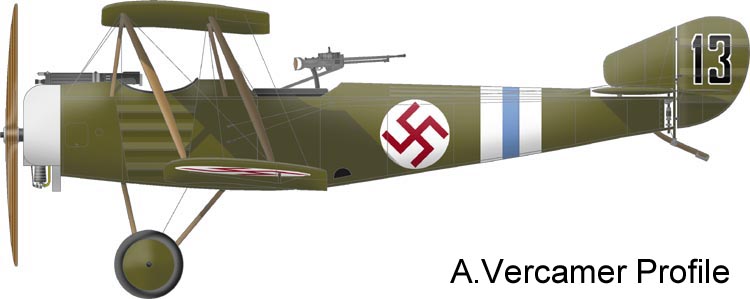
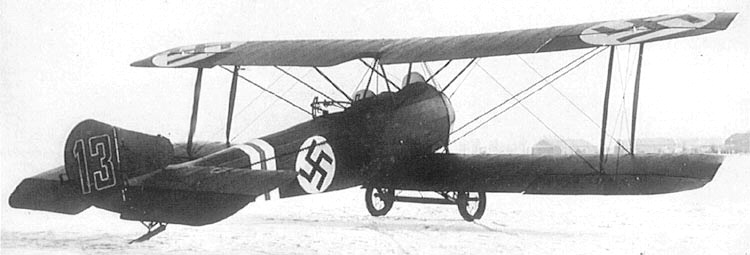
Original serial number - A6985, engine #13490 (130-hp Clerget)
Received as a gift from the British (March 26, 1920).
1921 - on the roster of the 3rd Aviation Group.
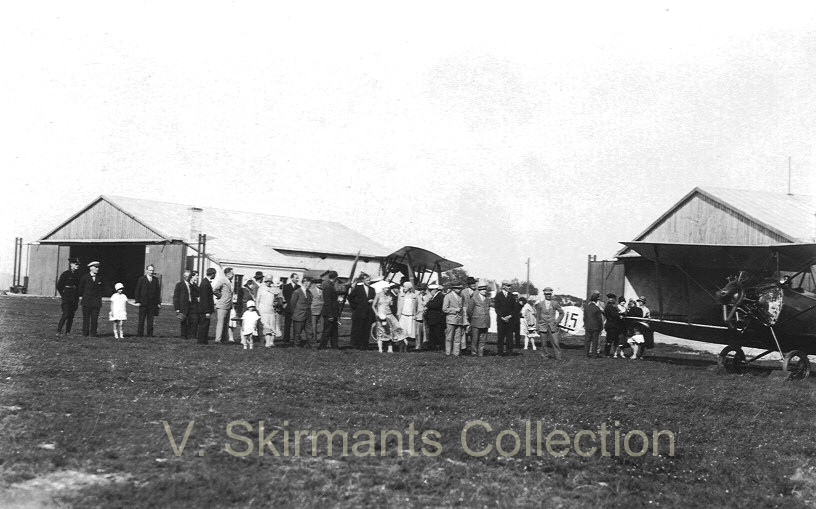
June 15, 1924 - participated in the Air Festival at Spilve, Riga.
1926 - after major repair/overhaul, #13 is test flown (Mardoks) and returned to active service.
February 28, 1933 - transferred to the Aizsargi where it continues to be used and repaired.
October 15, 1935 - the aircraft is crashed for its last time - T.Gailitis (pilot) and L.Ozolins (observer).
The aircraft was finally written off as not being worth repairing any further.
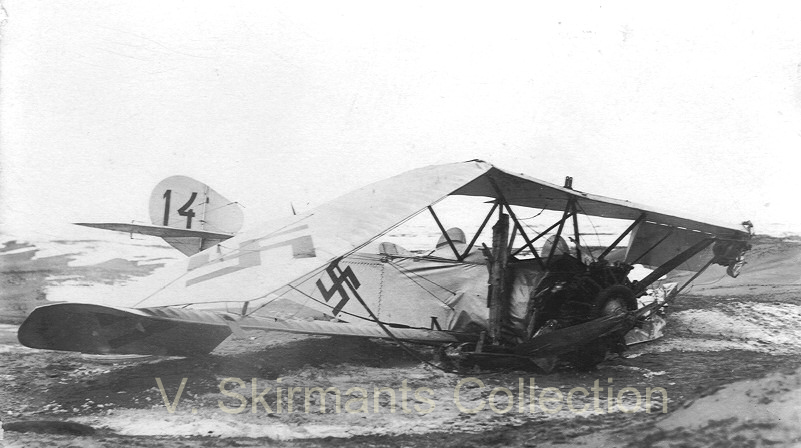
#14
Original serial number - F7590, engine #2539 (130-hp Clerget)
Received as a gift from the British (March 26, 1920).
1921 - after a major overhaul it was test flown and assigned to active service.
1921 - on the roster of the 3rd Aviation Group.
1924 - appears on the roster of the Reserve Squadron.
June 15, 1924 - participated in the Air Festival at Spilve, Riga.
1928 - re-engined with a Siemens Sh12 (9-cylinder) 110-hp radial
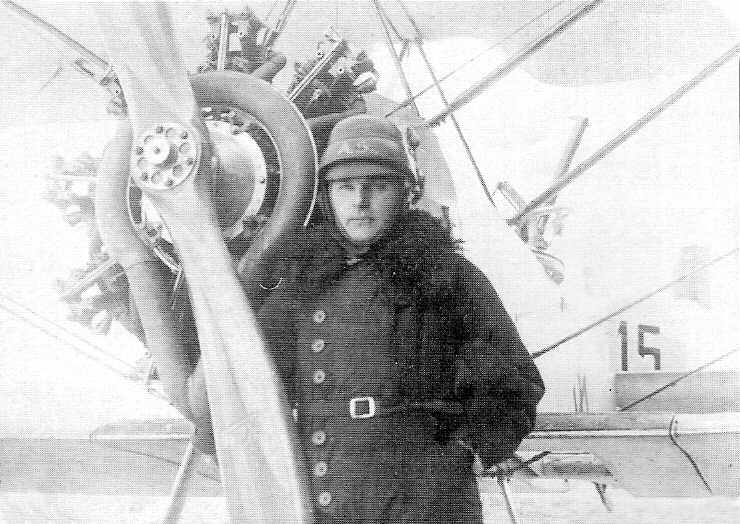
#15
Original serial number - A5254, engine #29694
Received as a gift from the British (March 26, 1920).
April 13, 1920 - Transferred from Spilve to Rezekne to take part in the battles vs the
bolsheviks in Latgale. Heavy forced landing at Koknese damages the aircraft.
1921 - Appears on the roster of the Aviation school, but it is noted that it lacks an engine
so is probably in the midst of a major overhaul.
1925 - appears on the roster of the Recon Squadron.
1928 - re-engined with a Siemens Sh12 (9-cylinder) 110-hp radial
Sources
- Bruvelis, Edvins Latvijas Aviacijas Vesture
- Hall, Malcolm Sopwith Aviation Company
- Irbitis, Karlis Of Struggle and Flight
- Sparnota Latvija
- Windsock Datafile #34 (Sopwith 1 1/2 - Strutter)
- Windsock Datafile #80 (Sopwith 1 ½ Strutter)
- Additional information (dates of flights) taken from R.Gulbis log book